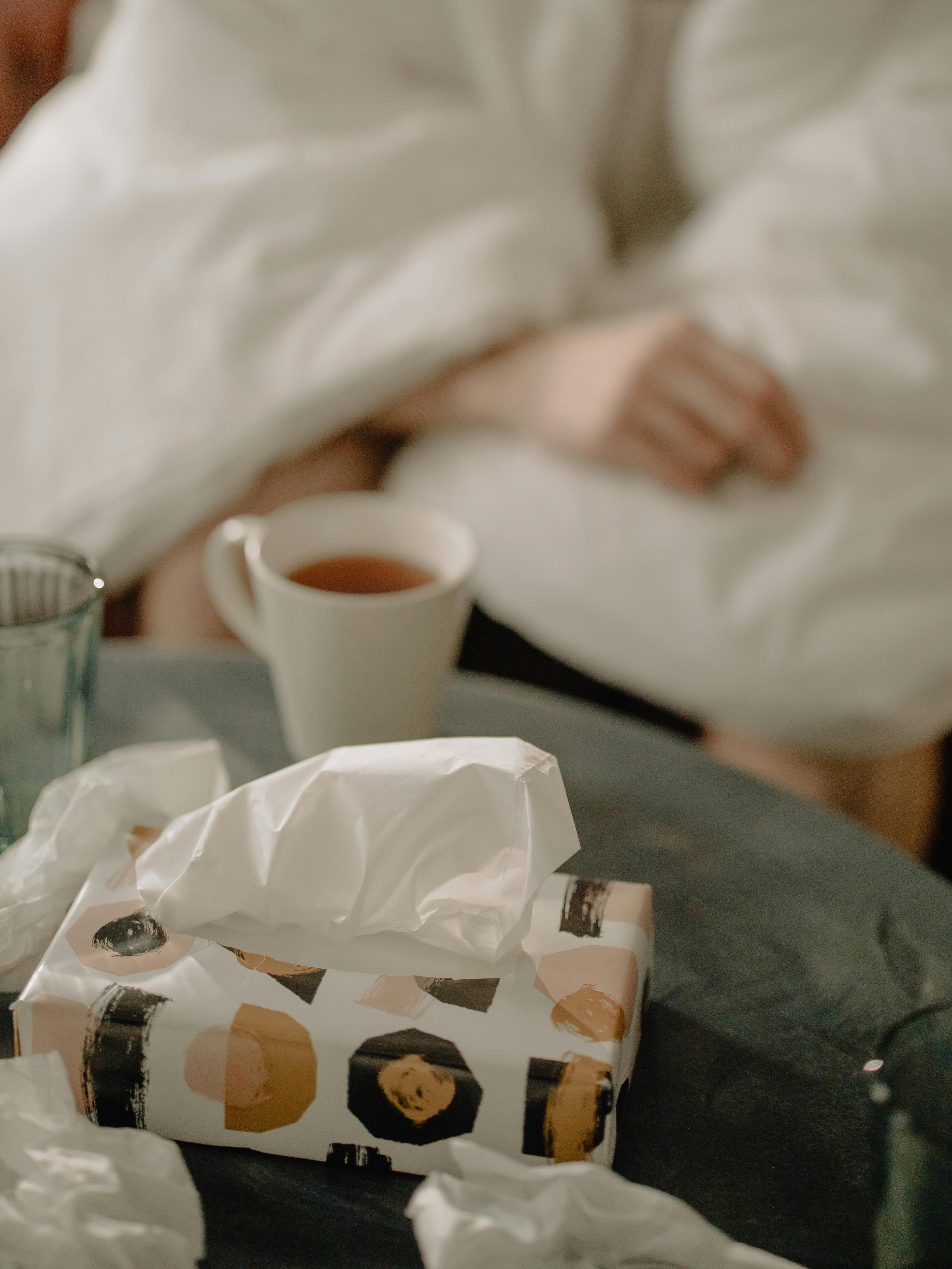
Processing post-election panic

Where do you begin, when your worst fears seem to be coming true?

How do you process it? And what do you do?

Photo credit: Marek from Pixabay

Back in 2020, when it became clear we might be facing a second term of Trump, my husband and I were fearful for our future. We relied on affordable health insurance as self-employed people and people with pre-existing conditions. We had one plan available to us as we traveled the country in our RV. If that plan went away, or if, even worse, all affordable health care went away for those who were self-employed, we wouldn’t be able to do the work that we loved. Not to mention fears around bodily autonomy and the Supreme Court.

So while in 2016 we’d done a bit of research into moving to Canada, we got serious about it in 2020. Ultimately, for us, the path forward involved my husband going back to school.

We knew we might be overreacting, but we felt like we needed to prioritize our own survival (including mental health) first. So we went for it. We knew we were super privileged. But we felt we needed to put our own oxygen mask on first and avoid becoming a burden to our friends and family if we stuck around and weren’t able to make things work.

Unfortunately, there have been several times since we moved here that we’ve been reminded that some of our worst fears have come true. Reproductive rights being the stunning one. And of course, now, it feels like that’s just the tip of the iceberg.

My work isn’t political on the surface. I help people to create a life they love. Sometimes that’s career coaching, sometimes it’s life coaching. Sometimes it’s mental fitness work or exploring spirituality or many other topics. But I’ve always been passionate about human rights. The rights of everyone to make their own, empowered choices, regardless of what other people expect or advise or prefer. The rights of ALL of us, without judgment of our gender or if we’re trans, the rights of all of us under the 2SGLTQIA+ umbrella, whatever our skin color or country of origin or religion or abilities or neurodiversity…you get the idea.

I want everyone to be fully supported in becoming their full, authentic selves, bringing their own unique gifts and perspective to the world, because I believe that makes the world a better place. If we all had our needs met and could tap into what we do best, I truly think so much fear and anger and hate around the world would start to disappear.

Facing the news yesterday, I observed myself moving through a series of emotions. I’d feel mad, frustrated, fearful, sad, anxious about the future. I’d then catch myself in my emotions and do some grounding work to regulate myself. And then, soon enough, my thoughts would take over again. Maybe I’m ten minutes into a task and another idea occurs to me and I’m in tears or raging. Things like:

  • What if we have another pandemic in the next four years?
  • What if Canada kicks my husband and me out unexpectedly?
  • What if my friends and family aren’t safe? How can I support them if things get really bad?
  • How do I respect and forgive my friends who prioritized their own concerns over what seems most pressing to me – the humanity and bodily autonomy of a majority of US citizens?
  • How do I stay regulated and not rage over inconsequential things (otherwise known as, tell me you’re an Enneagram 1 without telling me you’re an Enneagram 1)
  • I love the warmth of this tea…or this blue sky….How do I avoid losing sight of those gifts in my own fears right now?
  • How much time before it gets scary?
  • What about everyone who can’t leave?

In all of this, I keep coming back to gratitude. Anchoring into that has been useful for me.

  • Gratitude that I’m here in Canada
  • Gratitude for the community of people here as well as the global community of friends and family who love and support us
  • Gratitude for beautiful days, for a warm drink, for an apartment we can afford, for work that lights us up
  • Gratitude that right now, today, my friends and family are okay

And on and on.

Please take the time you need to acknowledge and process your emotions. And when you’re ready, use your tools to self-regulate, to lock into gratitude, to truly care for yourself and your needs right now.

I hope that in the coming days, if you’re also in the United States and feeling fearful (or, honestly, even if you aren’t), I hope you’ll consider asking yourself a few questions. Before doing so, I encourage you to make sure you’re in as grounded, calm, and wise a mindset as possible, to make sure that you answer these questions not from fear, but from love, with the best wisdom your mind has to offer:

  • Is there anything I’ve been putting off that I should get to soon?
  • Are there any steps I should take to keep myself and my loved ones safe?
  • Are there any conversations I need to have with friends or family?
  • What are my worst fears – and is there anything I can do today to alleviate them?

If you aren’t sure how to calm yourself down or change your emotional state, there are some wonderful tools out there, including many I teach. You can also check out this article I wrote in 2021 on breaking out of a funk.

Please don’t judge yourself or your friends or neighbors for how they’re processing things right now. As much as it might be tempting to, try to view yourself, and others, and even this situation, with curiosity. If we can tap into the wisest part of ourselves, acting from love for ourselves and those we care about, we are much better equipped to work efficiently, feel empathy, and know what’s needed from us in this moment.

(And on a lighter note, my friend Dave Agans has an amazingly hilarious series, a trio of books, the last of which I finally read recently. If you’re into quirky sci-fi or speculative fiction and humor, you might love The Urban Legion as much as I do. Somehow I feel like these might both resonate/feel prescient and also be a great way to relax right now.)

Take care, friends.

P.S. I’m going to begin offering a fifteen minute pause each week for us to reset. There’s no cost. If you want to join me to do some mindfulness exercises, ground ourselves, feel a little joy, and release those negative emotions, you are most welcome. You can sign up here. Alternately, I periodically coach and share in my Facebook group, Crafting the Life You Want.

the surprising benefits of tackling clutter

I’ve always found myself caught between two sides of myself in keeping my place organized. One part of me is an aspiring minimalist, with a keen awareness of the gift of calm and peace I feel in a clean, tidy, and simple space. Other part of me is a pack rat, wanting everything organized in its place but seeing a need to hold onto everything, and with a brain so busy with activities that I seldom want to stop and tidy up.

If I put much (read: any) weight in astrology, I might ascribe this to being a Gemini. I do put some of it up to my nature as an Enneagram 1: my perfectionist tendencies are ingrained habits and coping mechanisms from way back in my life. In my mental fitness work, this would be my stickler saboteur coming out to play. Like so many 1s, we want structure, but we also rail against it, especially when it seems like no one but us knows how to do it correctly. Aren’t brains delightful sometimes?

Regardless of the habits or emotions you find popping up related to cleaning and decluttering, I love this tip I gleaned and shared in the midst of a decluttering phase early in COVID:

When you’re decluttering, always start with the most visible clutter.

It’s not rocket science, but how great is this suggestion? If guests enter your house through the front door, that means EVERYONE will get that view, even if they’re just popping their head in to pick up a package or drop off a meal.

So when you’re ready to declutter, always start with the most visible clutter: you know, the stuff you can see when you open the front door to come inside.

You know the brilliant thing about this tip though? It applies to both decluttering and to our daily lives in general.

In the physical realm, if we start with what’s most visible, we’ll see progress immediately, and even if we get distracted from our task, if someone shows up at the house, they’ll immediately get a cleaner view than they would have otherwise.

In the same way, if we’re feeling overwhelmed by all of the tasks on our to-do list, one helpful method is to start with what’s most visible. If there’s an item that’s been on our list, haunting us, for two months, knocking that thing off the list a) means we won’t be wasting any more brain space or time worrying about getting it done and b) means we can knock it off the list. Chances are that it was taking up more than its fair share of space, and having that done will be super helpful.

Likewise, if I’ve got a million things to do, but I keep putting off making a priority list, that’s the most visible thing that will be a huge help. If I do that first, I’ll be able to see the items that are essential and urgent and prioritize them accordingly. If the most visible thing is that I haven’t updated the family calendar or made the doctor’s appointment that’s required of me, maybe it’s that. But the same idea holds. Consider what’s most visible, or most present, and start there.

While my mental fitness work has me in a pretty great space right now, anxiety is always an old habit my brain can hop to with ease. When there’s extra on my plate to navigate, anxiety means that clutter that normally wouldn’t bother me can feel overwhelming. (I ignore the inner critic and judge in my head under great circumstances, but if I’m tested enough, the anger can say hello! Yes, I’m a textbook Enneagram 1, and my strickler and judge saboteurs are especially strong, and these patterns will always be available to me if I let them.) But the flip side of it is that when I make some time to declutter, I feel palpable relief, basically immediately, and my anxiety gives me a break for a while.

While the visible clutter isn’t always actually the most important thing on our list, it can give us the mental capacity to tackle other things on our list.

If your email inbox is freaking you out a little bit on the daily, it’s time to set a timer and do a bit of decluttering there.

If those dishes are taunting you while you’re trying to work on your side hustle, it may be more effective to do those first, or at least delegate and pass it on to another family member.

Don’t underestimate the power of tackling that visible clutter. And the reverse can be true as well. If you start with the invisible clutter (you know, the stuff in your cabinets), you won’t get the visible satisfaction of seeing and showing off your progress after a decluttering session.

Likewise, the invisible brain clutter may include tasks that, while nice to tackle, are ignoring the elephant in the room, or your brain, metaphorically speaking.

So, I challenge you – tackle some clutter this week. Physical or otherwise.

Thanks for reading, and have a great week!

This article is based on an article I originally published on February 5, 2021.

THE ROLE OF THE SACRED IN CRAFTING YOUR DREAM LIFE

Do you consider yourself to be a religious person? Or a spiritual person?

It’s something that I’ve struggled with somewhat for as long as I can remember. I’ve always wanted to have faith, to have a certainty or sense of knowing or trust about what’s coming.

I grew up Episcopalian, aka mainline Protestant, aka Christian, in a fairly liberal, “low” church that saw more diverse families than I ever saw in my classes at school. It wasn’t unusual for our pastor (a woman) to have us dance around the church, singing a song that wasn’t in our hymnal, or have us engage in discussion groups during worship.

Nevertheless, even with her occasional elaborations and interpretations of the beautiful Episcopal prayer book, I still grew up with a fairly “by the book” religious education.

Going through confirmation classes, I did my fair share of questioning, but I’m also a rule follower, so it didn’t occur to me to do anything but complete the classes and get confirmed in the church.

When I went to college, for the first time I felt like I had a wide variety of options for where and how I would worship. Some of my friends became Pagan (intriguing, though it never occurred to me at the time to seek it out), but after trying out an Episcopal church service in town (nice, but nothing too memorable for me), I found my home at our college Protestant services.

These ecumenical services brought together students and staff from very diverse backgrounds, and they were designed to give everyone a little taste of the familiar. So we’d sing a “traditional” hymn or two that I might have sung growing up, and we’d have a praise and worship part of the service, led at the piano by our Black pastor who had grown up in the African-American Baptist tradition and gotten his bachelor’s degree in music. For that section of worship, there was no need to hold the hymn in our hand – the pastor would call out the lyrics and we’d follow him for the cues.

There might also be another hymn or two from a different hymnal, and perhaps we’d have a guest performer, and every other week, I’d sing with the gospel choir, where I was usually the only white singer and learned every song by ear – an incredible contrast with my strict, traditional, white, Western music education. It was a wonderful immersion in another culture and a new experience for me.

I’d stand on the stage with the choir, singing gorgeous music that filled and uplifted the space, and I’d be in my element. Afterwards, people would come up to me and say how transformed they were by my solo, or how much they enjoyed our performance, how moving it was.

I always wished it would move me that way. I felt like something was missing, something was wrong with me. To be fair, music did sometimes give me glimpses of God, just brief moments, when all the musical parts would come together perfectly. But otherwise, I’d always feel like there’s something wrong with me. Jason Robert Brown describes it well when he requests, “Let the music begin.” and “Longing to feel what you feel…music of heaven to open some path to your soul and let something glorious in” in his song “The Music of Heaven”.

After leaving the utopia that my bubble of a college experience was in many ways (definitely lots of privilege there), I spent the next year traveling the country with a children’s theatre, followed by a few additional years of searching when I settled down in New Hampshire. In weeks that I had some flexibility on a Sunday, I made a point of checking out a local church (in hopes of finding the connection I’d been seeking). I enjoyed the contemporary Christian experience from a music standpoint, but I found it didn’t resonate with me in terms of beliefs. I found lots of mainline Protestant services that reminded me of home (similar, but different), and I got angry at the Catholic church a couple of times. I also had a couple of truly frightening interactions that I won’t get into here.

Later, I found a ton of satisfaction as the accompanist at churches I found a home and community in. I loved the communities I worked in, and in addition to those occasional transcendent music moments, I was delighted to help other people find those connections to God through my music.

In more recent years, I’ve loosened up my definition of spirituality. Maybe I’m never going to feel that clarity I’m seeking every Sunday. Maybe it’s more a question of creating a practice of contemplation, where I seek wisdom, get in touch with my inner knowledge and seek connection with the universe. I connect with nature. I read. I engage in challenging conversations. Creating sacred time for myself each morning has evolved into one of my favorite things about my day, and I’m so thankful to have a morning routine that truly lights me up and makes my day better. I’ve also been getting to know my local Jewish community, an aspect of my heritage I was rarely exposed to as a child.

Working with my clients, I’m finding it’s really important to encourage them to take time for themselves to check in and be still each day. We all need that time for ourselves, and the consistency of a morning (or evening) routine offers us so many benefits. For some it’s meditation, for others prayer or reading and journaling, but it is essential.

Do you aspire to have a consistent morning practice? If you’re working to create the life you want, it may feel daunting to acknowledge where you are now compared to where you want to be. I encourage you to take one small step today to get aligned with your dream life.

Does the dream version of you make time for a prayer each morning? Practice gratitude before bed? Take a walk outside? You may not have the car of your dreams, or the abundant bank account, or the dream schedule or supportive friends or loving partner, but I’ll bet there are steps you can take today to make your present more like your future.

So while spirituality or religion isn’t a requirement as you create your “dream life”, or a life that you love, it’s important for all of us to have some grounding practice that centers us each day. And honestly, sometimes even very religious people, or those who appear so on the outside, aren’t taking enough time to do the work on the inside.

If you’d like help with this, let’s get on a call to discuss how I can help you get there.

Do you have a sacred practice? Does it light you up? What’s one change you can make this week to get you even more aligned with your future and best self?

This is based on an article I originally wrote and published on December 11, 2020.

Can Rage Be Healthy?

A few weeks back, it was about three p.m., and I’d had a great day. A few physical symptoms I wasn’t loving, but I’d still had a really productive morning: got regular bloodwork taken, took a gorgeous walk along the ocean, went food shopping at the supermarket and the farmer’s market, and I completed several to-dos at home and work.

Pretty awesome, right?

I was feeling accomplished and grateful to have energy for all that.

And then, all of a sudden, a passing thought – I don’t feel quite right. I don’t think my body is regulated right now.

No obvious trigger or anything. Just out of the blue.

Ross and I had just made plans to go take a spontaneous trip maybe a half hour prior, so I readied myself to go and wondered if I should pause for some polyvagal exercises just in case to settle myself.

And then, picking up my phone, I encountered a tech issue. And I immediately went into a rage.

I was PISSED. Physical sensations of tightness and heat and even verging on facial numbness, through my face and chest. Anger seething through my arms, angry thoughts and visceral sensations so oversized for the situation.

Ross was in the room with me, and none of this was directed at him, but after feeling on display and unable to control myself, I just picked myself up and went to bed, where I then pounded my mattress and pillow, made some loud rage noises, and continued the display without an audience.

And the thoughts right behind were along the lines of why is this happening? I wish I could control this! I thought I had the skills to avoid rage now! I’ve done so much Enneagram and mental fitness work…where did this come from?

But after a bit of these unhelpful, frustrated thoughts, I realized there was something I could do: I could accept the situation. I could accept that this is happening right now, and not try to fight it. And when a little after that, thinking I was feeling better, I realized I was still on the edge of rage, I called upon acceptance again.

Radical acceptance is defined as “the ability to accept situations that are outside of your control without judging them, which reduces the suffering they cause” by Verywell. Once we accept the situation as it is, we’re able to accept that we’re having emotions. It helps the different parts of ourselves to feel heard and seen.

I couldn’t change that I was having a tough day where I was easily disregulated. I was using my tools (one of them being to focus on the physical symptoms of rage and anger), and maybe that helped some. But I wasn’t able to stop the symptoms from reoccuring. But I was able to stop the anxiety spiral by focuing on accepting the situation and the fact that I couldn’t control it or change it.

The more practiced I have become at using the tools in my toolbox, the more quickly I’m able to recognize unhealthy thought patterns and old habits, ground myself, and consider making a different choice.

Whether you deal with rage or anxiety or fear or other struggles, you have the opportunity to accept things as they are, each and every moment, if you choose to. And whether you choose to break the pattern or not, please don’t judge yourself. Accept yourself just as you are and let the rest go.

Think you might like a coach to help you cultivate these skills? Let’s talk!

Join me for an enneagram intro next week!

I love my mornings. And part of my morning practice most days involves contemplative reading of some kind. 

Today while re-reading an Enneagram text I stopped at a quote by Henri Nouwen: “We cannot suffer with the poor when we are unwilling to confront those persons and systems that cause poverty. We cannot set the captives free when we do not want to confront those who carry the keys. We cannot profess our solidarity with those who are oppressed when we are unwilling to confront the oppressor. Compassion without confrontation fades quickly to fruitless sentimental commiseration.” 

I found this to be an important quote to consider. I even challenged my social media connections, asking them “What’s one step you can take today to confront the oppressor?”

My spiritual studies, especially my Enneagram work, has been so life-giving.

I’m excited to have heard from a few of you regarding the next Enneagram group program I’m leading. 

You may be on the fence, unsure of what, exactly, the Enneagram is and why you should be checking it out. Is it a useful tool? An ancient cult? A TikTok trend? 

Learning about our personalities and why we do what we do is FUN. It’s also tough to explain the Enneagram in an elevator pitch, but it’s transformed my life as well as the lives of SO many more, so I’ve created this intro as an easy way for you to get a sense of it and whether it’s something you’d like to study further in the future. 

Thanks for reading, and take care!

Five Years rving (on the self-helpless podcast)

This week I’m featured on the Self-Helpless Podcast, hosted by Delanie Fischer.

I lived in an RV with my husband, Ross, for five years, traveling throughout the United States. (In fact, this blog is where I documented our travels, so you can scroll back and read ALL about it if you’re curious!)

Want to bring your own dream to life? Not sure of your next step? You’ll want my Four Steps To Your Dream Life Blueprint.

In this episode, I share tons of tips for how to prep and plan for this kind of lifestyle. Even if you’re not considering RV/van/tiny home/bus life, the episode is full of practical takeaways for navigating change and adventure, ridding yourself of all-or-nothing thinking, the many ways you can bring dreams to fruition, and how to infuse more creativity, spaciousness, and play into your life.

Plus:
2 experiments we did before hitting the road
How to decide what clothing and items to take with you vs. leave behind
A literal dream that changed everything for us

You can find and listen to the full episode of @selfhelplesspodcast wherever you enjoy getting your podcasts.

how to break out of a funk

A hazy sunrise

Okay, I’ll just be honest. I’m sitting here, feeling bleh. I don’t want to write a blog, I don’t want to be creative, and I don’t want to work. I don’t know what I want, but I wouldn’t say no to junk food, hugs, or a warm bed right now. Motivation is far away right now, that’s for sure.

So what do you do when you aren’t motivated, but you have obligations to keep? When you know you should be doing something, and maybe some specific “somethings”, but you find a part of your brain telling you to do anything else instead, or maybe scroll social media instead. What do you do when you know you should get some work done, but you’re just not feeling it?

It’s honestly a self-experiment. Different moods and different people will find different things help them to break out of the funk. Some of us need outside accountability to get things done. Others bristle at the suggestion of doing anything unless it comes from within. We are all unique, and if we haven’t done a lot of self-reflection and work, we may not have figured out how best to crack the code when we’re in one of these moods. (Or maybe we just become obstinate sometimes and ignore that inner knowing of what we should do? Maybe it’s just me…)

Keep this list on hand for when your brain is just saying “nope” and you need an idea of what to do next.

Here are a few ideas to try when you’re stuck:

  • Talk to an accountability buddy
  • Talk to a loved one
  • Journal about what’s going on
  • Meditate
  • Get outside
  • Take a walk/run
  • Dance to a favorite song
  • Take a nap
  • Splash your face with cold water
  • Have a cup of tea or coffee
  • Eat a comforting meal
  • Play with your pet
  • Turn on an inspiring podcast
  • Make some art
  • Color
  • Try some aromatherapy
  • Play an instrument
  • Sing
  • Try a couple of yoga postures
  • Talk to a cricket

Ha! Gotcha. Made up that last one. Just wanted to see if you were still reading. (But hey, Jiminy Cricket may indeed have some wise words for you!)

Can you relate to this feeling?

What do you recommend to break out of a funk?

P.S. It may take MANY of these steps to break you out of your funk. Offer yourself grace if you can’t change things for yourself right away. And if you’d like some support to help you become more efficient, happier, and clearer on your next steps in life, let’s schedule a time to talk!

A version of this article was originally published on February 26, 2021.

eliminating soul clutter

Soul clutter. The cobwebs keeping you from making meaningful connections. The dust hiding your true desires. The distractions and disappointments. It’s both poetic and real.

“How am I regularly getting rid of the soul clutter I no longer need?”

Emily P. Freeman shared this prompt in her book The Next Right Thing, and I LOVED it.

How powerful is that?

What are you holding onto that you can let go of? What stories, what taunts, what hurts, what old patterns aren’t serving you any longer?

As she goes on to say in her book, it’s not that you shouldn’t hold onto anything, but that nothing should have a hold on you.

When we can let go of the stress of extra obligations, when we can declutter and destress and clear the decks, it’s in the stillness that we can hear our inner wisdom.

Clearing space, away from technology, away from the voices of others telling us what is or isn’t right for us, we start to hear that inner knowing. That’s when the wisdom comes. That’s when the answers appear.

Have you carved out any time for stillness or silence this week? When you do, what do you hear?

And if you know this is something that will benefit you, but you’re struggling to do it on your own, I’ve got your back! Reach out to me for a no-obligation conversation as my gift to you, where I can help you to move the needle on what’s keeping you stuck, so you can feel happier, calmer, and more equipped to lean into what only you can do in this world.

I’m also looking for people interested in studying the Enneagram with me. You can either begin your Enneagram journey with me or, if you already know your number, you can join our book club, which meets on Mondays once a month at 4:30 p.m. ET/5:30 p.m. AT. The Enneagram is my favorite tool for understanding our personalities, why we do what we do, and how we can break the cycle. I’d love to share it with you. Contact rossandjamieadventure at gmail.com to learn more. Scholarships may be available for those who qualify.

Wishing you a day and week with joy, wonder, meaning, and the space to do what is uniquely yours to do. Take care.

This article is based on an article I originally shared on December 18, 2020.

Finding your happy in the holidays

Hi friends. I’ve been dealing with some health challenges that, while very treatable and straightforward, have had me feeling completely exhausted much of the time. It’s been especially challenging given that this has been the busiest season of my life since moving to Prince Edward Island.

A typical week, over the past six weeks or so, has seen me performing 1-3x, attending or leading rehearsals and auditions, having meetings, and perhaps a social gathering or outing as well in the mix.

In addition, I interviewed for a dreamy 3 days a week position (I was so close, with wonderful feedback on how well-suited I was and how great my interview and experience were etc.), took on some very part-time writing and virtual assistant work, supported clients using the Enneagram and mental fitness, and did some great vocal coaching in individual and group settings.

What’s been key for me, in all of this, has been two things: prioritizing & choosing joy.

Prioritizing is always helpful, especially when you’re someone like me who tends to have several important projects and commitments happening simultaneously. But when your health isn’t in a good place, prioritizing is essential. It becomes your lifeline. What’s the one thing I NEED to accomplish today, or the consequences are dreary? What’s the one thing that, if I accomplish it today, gives me the best chance of hitting my goal for next year, or creating the income I’m seeking for next month? What’s the one thing that, if I made time for it, could make a meaningful impact on my feeling rested or accomplished or loved or content today?

Prioritizing is how we make sure we finish the holiday season satisfied. Maybe that means we balanced the need for quiet contemplation with the need for holiday shopping or managing family members and their expectations. Maybe it means we balanced festive gatherings with time for ourselves, or we took some time off while still meeting the demands of a boss or our clients or our families.

But how do we choose joy?

I choose joy every day, many times a day. When I start to feel the telltale signs of tension in my arms and shoulders, or feel my head getting foggy and anxious thoughts creeping in, I acknowledge what I am feeling, and then I choose to set aside stress and overwhelm. I choose joy.

I choose to stick to my wiser, positive emotions, choosing what’s best for the particular moment at hand. Maybe that means I choose to empathize with people, near or far, who are suffering. Maybe I choose to move into calm and clear-headed action. Maybe I explore the options available to me or create an entirely new, outside of the box solution to the problems I am experiencing or observing around me. Maybe I focus on gratitude. These are all ways to choose joy, for me.

Joy can mean sipping hot cocoa or looking at Christmas lights or giving a gift or cooking a meal together.

Joy can mean letting go of opportunities for overwhelm and instead embracing the more productive emotions available to me. Instead of dwelling in anxiety, what’s the one action I can take to make a difference in this moment?

Does that sound like prioritization? It sure is.

We have chosen a beautiful life that means we are usually far from family during the holiday season. We have done that mindfully. That doesn’t mean that we don’t simultaneously wish we could be here and there. It doesn’t mean we don’t have complex emotions at this time of year.

I’m exploring ways to clarify for myself what matters to me during this season. What are my priorities? Who do I want to see, talk to, spend time with? What traditions do I want to maintain? What new traditions do I want to start? What just isn’t my priority, so I can let it go, accept it as it is? What isn’t within my control, and how can I work on accepting that? And where am I finding joy?

Wherever you are, whatever your situation this year or this week, I believe you have some agency. You can choose a thought that brings joy. Maybe you can choose an activity, or choose to skip an activity. If you aren’t sure how to proceed, let yourself get quiet and contemplate what you truly want and what truly matters to you. Do some grounding exercises. Phone a friend or hire a coach or see a therapist if journaling or brainstorming yourself isn’t getting you there.

And when you’re ready, I hope you’ll prioritize with intention, and choose joy.

Happy holidays, friend.