task ahead seem Impossible? Try smaller steps

Hi friends. In the face of an increasing number of horrendous headlines, including (as I write this) the news that transgender service members were referred to as “dishonorable” by the Supreme Court and the ban on transgender people serving stands, I am going through waves of emotions. 

But after reading those headlines, I forced myself to walk to the mailbox, and you know what? I felt joy. I felt gratitude. The sun was overhead, it was warm enough for me to walk outside without a coat on, the birds were chirping, and so many beautiful flowers were blooming. 

So in thinking about what to write today, I’m reminded of the progress I’ve made on my book – as well as the realization that I’m still potentially years from seeing it out in the world. 

You know something kind of unique about me? Before I wrote this book, I nearly wrote another book’s first draft. Yes, I have at least ¾ of a memoir about a particular summer of my life in professional theater sitting in the cloud. 

Something that I’ve learned about myself, in my Enneagram and in my mental fitness studies, is that I as amazingly creative as I am, when I take on a really big project, and when I don’t have accountability, and when it’s for me, and not for someone else, I may not finish it. It’s not something I’m proud of. It’s my “shadow side”, as they say. You could also call it my “restless saboteur”, or what it looks like when I am in “low 7” according to the Enneagram. 

Not doing anything with this book is just one of many of these projects. And this will probably blow the minds of some people who know me and can rattle off all the things I’ve accomplished along the way. But I think that for me, when we’re talking about how to take a book from first draft to finished product, there was really a feeling of being daunted by what I didn’t know. Combine that with the realization that this particular book didn’t actually have a clear purpose for me in my career, and I let it sit on a shelf instead of focusing my energy on sorting out next steps. 

But this time, my friends? This time will be different. 

I think I first announced to the world publicly that my book Crafting Our Life Adventure would be published years ago. I even created this sales page so you could sign up to learn when the book is ready. (Still works!)

But you know what? Publishing a book is a giant task. And it’s tough to stay motivated on a giant task when you’ve got several or dozens of other tasks, many of them urgent, demanding your attention. 

You may have heard this advice before: 

“How do you eat an elephant? One bite at a time.” 
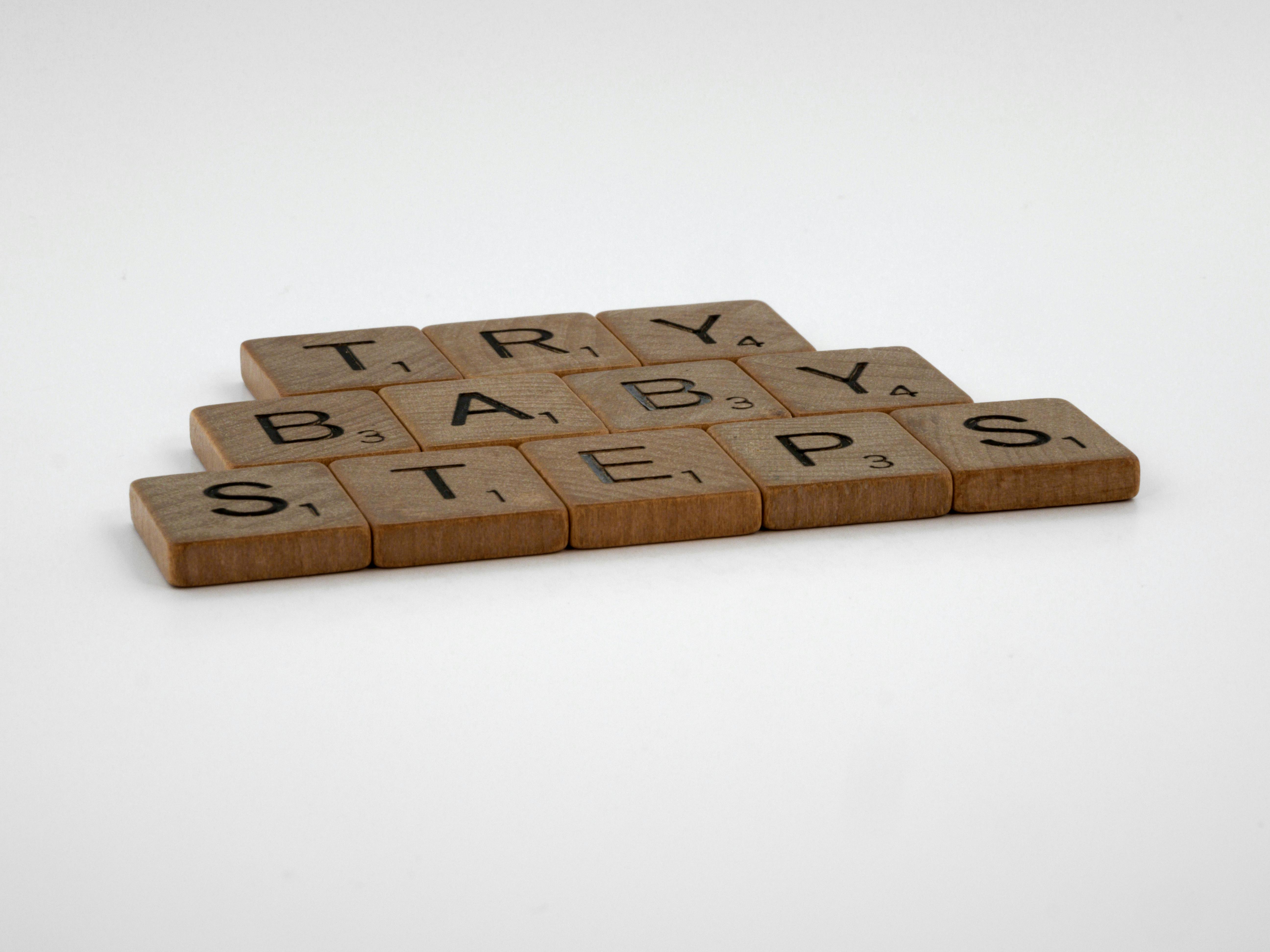
Photo of tiles with the letters spelling “try baby steps” by Brett Jordan

And so while last time, I let myself get pulled toward easier and/or more pressing wins than publishing my book, this time is going to be different. 

I started out with the knowledge that I needed to sort out what the steps actually will be for me to publish a book. 

So over the past couple of weeks, I’ve been asking friends and friends of friends for all of their tips.  

After I have all that research “done”, or at least feel MUCH more informed than before, I’ll be using the research to create a checklist or road map for myself, outlining the next pieces of the puzzle and giving me smaller wins that I can celebrate along the way. 

And finally, I will begin taking daily, or at least weekly, steps to realize my vision: to have my book published and out in the world.

This process is actually a process I repeat over and over again in my life. If you want to read it for yourself and reference it in the future, you can. I call it the Four Steps To Your Dream Life Blueprint, and you’ll find it here. I’ve used it throughout my life to accomplish my goals, and I hope it helps you too. 

And it can work for anything, I think. 

But if that’s too much, to look at all four steps toward a big vision, just focus on breaking your task up into smaller pieces. 

Find taking a shower too hard today? Break it up into smaller steps. Gather your towel and toiletries. Gather clean clothes. 

Want to reach out to your rep but not sure what to say when you call? Break it up into smaller steps. Write a list of bullet points to cover, or even write yourself a script. Practice saying it out loud to yourself. 

Know you need to do some batch cooking, but feel overwhelmed? Break it up into smaller steps. Grocery shop with a few meals in mind, or roast some veggies and rice and a protein that will make it easier to make dinner from there. 

So I hope that’s helpful. At minimum, breaking a daunting task into small steps is really useful for me. And if you have the brain space to think about the big picture right now using your wise mind, feel free to grab a copy of the Four Steps and give it a try. 

And if your brain isn’t allowing you to tap into your wiser self right now, I 100% get it. And if you’d like some support in doing so, schedule a Saboteur Assessment with me. I’d love to help you learn to let the sabotaging thoughts, the ones that get in the way of living a life you love, go. 

Take good care. Keep resisting. 

How to Stay Calm Under Pressure (Traveling or At Home)

In stressful situations, we tend to default to old habits and/or move into survival mode to keep ourselves safe. All of this is completely understandable. 

Because we’ve all had different experiences, have different brains, differences, personalities and more, what one person does under stress can look quite different from someone else. It’s part of what makes us unique. But what isn’t unique is that we are all hardwired to do certain patterns of behavior under these circumstances. 

In thinking about the state of the world right now, I’m especially aware of how dangerous traveling is for so many people right now. Perhaps you don’t feel safe traveling internationally (or at least, you don’t feel safe crossing the border to get back in). Perhaps you don’t feel safe going to the grocery store or even leaving your home. 

The situations may be different, and the reasons may be different, but in any of these circumstances, the goal is for us to be able to stay calm under pressure. We want to know that we will be calm and in control of our actions, even if we are being interrogated or profiled or otherwise threatened. 

So I want to talk a bit about what happens to us under pressure, and how we can strengthen our practices and our minds to help keep us safe (or at least increase the likelihood of a positive interaction) in future encounters. 

Photo of blue sky and branches by Optical Chemist

I’m going to do so with compassion for others in challenging circumstances, to the best of my ability. I’m going to do so using the lens of the Enneagram and mental fitness. As usual, please keep in mind that I’m not a scientist or a therapist, and what I’m sharing are my own opinions based on my own experiences. If you want the technical scientific jargon, I probably won’t be going there, and I’m also not a lawyer or a therapist, so consult your own if possible and do your own homework and come to your own conclusions. 

My personal belief is that we all have some sort of wise, wonderful being inside of us. Maybe you’d call it your soul, or your sage or your wise mind. This special being is there from the time we are born. As soon as we’re born, basically, we start having experiences in the real world. From the noises and feelings when we first leave the womb, to the ways our family of origin treats us, to the kind and the harsh and the horrible humans who cross our paths along the way, we are challenged.

As a result of these experiences, we start developing a personality. We pick up traits along the way. We find that we get positive reactions or are safer more frequently when we do certain things, so we lean into those more. In the language of Positive Intelligence, the mental fitness program I use in my training and coaching, we find that some of our skills and characteristics serve us well, so we do them more and more, eventually resulting in some “saboteur” behaviors. We might discover people-pleasing tendencies, or a hyper-achiever who tells us we must keep “doing” or we don’t have value. Maybe we develop restless or avoider or controlling saboteurs as ways of coping with the world. 

In the language of the Enneagram, by the time we are adults, we’ve settled into a grab bag of personality traits that sometimes help us and sometimes hurt us, because we overly rely on them. They trap us.  If we study the Enneagram, we’ll learn that there are other people in the world very similar to us, whose personality types are also aligned with ours, though our own individual circumstances and that underlying soul within us means we’re still all different people. 

Whether we’re using the language of mental fitness or of the Enneagram, if we are privileged enough to begin working on ourselves, it begins with non-judgmental self-observation and a recognition that we’ve been holding so tightly to these personality traits and behaviors that they are no longer serving us. We recognize that if we want to become more of that beautiful soul, more of that lovely sage being, so wise and as we were created, we’ll need to let go of the grip that our personality holds on us. 

And if we’re able to see this, whether it’s because we did a saboteur assessment or read a book or experienced a life-altering circumstance or something else entirely, then we’ll find ourselves asking the question: what’s next? How do I step out of these habitual patterns that I’ve been in for so long, that have me trapped in my own patterns of personality? 

The answer, in a word? Presence. 

When we are able to let go of the sabotaging thoughts and judgment of our own mind, and instead practice being in the present moment, it’s the first step toward our own self-actualization.

It sounds lofty, but if we are able to practice, day in and day out, being fully present where we are, whether that’s by getting outside in nature or fully savoring a meal or feeling the water on our hands, we are, step by step, loosening the grip of our personality and making it easier for the wisdom of our wise mind to make it to the surface. 

You may be wondering what the heck this has to do with staying calm when we’re traveling. That’s fair!

But it has everything to do with it. If we practice grounding ourselves, using any tools of mindfulness, while letting go of judgment, we are increasing the likelihood that when we encounter a stressful situation, we will be able to hear the wisdom of our wise mind. We’ll increase the likelihood that we will know how to best take care of ourselves in that situation. We become calmer, and wiser, and less anxious. Our wise mind will recognize whether we need to go hide, or explore a solution, or fight back, or simply have the words to answer a question calmly and in the wisest way possible. 

We don’t usually learn to do this work. We are rarely, if ever, taught these skills in school. We are not taught that our mental muscles need to be strengthened and exercised just as much as our physical muscles do. 

If you’re curious about this, I’m pleased to offer a Saboteur Assessment, without cost, to anyone interested in learning more about how they’ve been getting in their own way. Whether or not you choose to work with me in the future, I’d love to help you gain the understanding to move forward in the world without being held back by your own patterns of personality. 

I can’t control what happens to you when you travel. But I’d love to empower you with the tools to control as much as you CAN control in your life. 

Take good care. Keep resisting.