The Enneagram, COVID, and Me

What an interesting week this has been! Saturday afternoon, as I chatted with family on the phone and walked by the water in downtown Charlottetown, I received a text from my husband saying he had COVID. Oh joy! 

Given that we live in a two bedroom apartment, I knew there was a decent chance I’d already gotten it, but in case I hadn’t, we began Operation: Isolation in earnest. 

It’s fascinating, going from a fully shared space to masking in “public spaces”, avoiding each other’s presence, and carefully planning use of the kitchen or bathroom. 

The Enneagram, if you aren’t familiar with it, is my favorite tool for understanding personality, myself, and how I relate to other people. I’m a card-carrying Enneagram 1, and part of that means I am in the dependence stance: as a result, I have had to do a ton of boundary work, because my natural instinct is to accommodate other people and ditch my own plans. This is especially true with my husband. 

I began this COVID-venture assuming that it would be really tough for me to keep so much distance from my husband. Especially so because physical touch is so important to me (it’s definitely one of my love languages, if you ascribe to that). 

After a day or so’s transition though, I was pleasantly surprised to see how much I’d gotten used to the new normal. In some ways, it was freeing that I had to do my own thing, and trust my husband to do his. And in fact, I found that being in the midst of “Operation: Avoid COVID” worked really well for my rule-following 1 personality. I’ve been so busy masking and otherwise checking the boxes that I haven’t been nearly as preoccupied worrying about my husband’s needs or desires. 

Fascinating. 

In my mental fitness work, we refer to this as being a curious anthropologist. While my inner critic or judge voice might get judgmental and opinionated about my recent behavior, I’ve found it quite easy to tap into my curiosity and just observe myself and my behavior. 

And that’s something the Enneagram offers me in spades. I have names and a much fuller understanding of why I do what I do then ever before – and as you can see here, I keep learning, week by week and day by day, even more about myself and the world. 

Last night we had an informal get together for the members of our Enneagram Book Club, and it was a wonderful opportunity for community and learning. As I always do, I left feeling more confident about who I am and more aware of the ways I am both different and the same from other people. And I continue to feel gratitude that such wonderful people choose to join my programs and work with me. 

Have you ever had this kind of “curious anthropologist” experience in your own life? What did it show you? 

P.S. There are lots of ways to work with me in the new year! Do a Saboteur Assessment, an Enneagram intro, or just contact me to learn more!

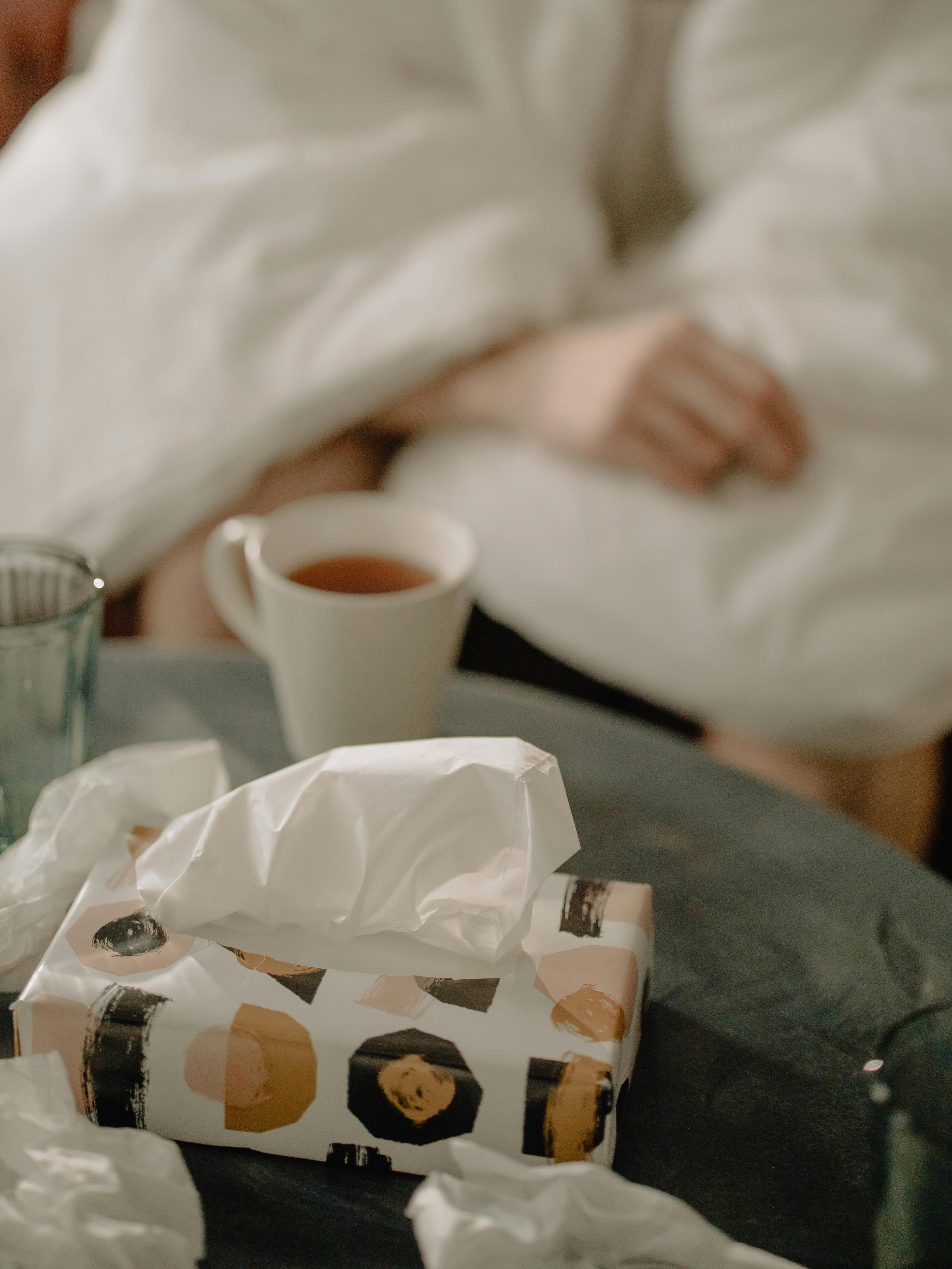
Photo description: box of tissues in the foreground, with a mug of tea and a person with their setup for dealing with being sick in the distance

Photo credit: Cottonbro studio

Healing as Self-Retrieval

Photo by Pixabay – A field of red flowers

One of my favorite reads this year has been The Myth of Normal: Trauma, Illness, and Healing in a Toxic Culture by Gabor Mate. It’s a long book, and I’m still working my way through it, but it’s the most comprehensive acknowledgement I’ve found of the complex factors that make our lives challenging as well as the varied ways, from individual to systemic, that healing is possible for us.

In the book, Mate refers to the concept of healing as a journey toward wholeness:

“It is a direction, not a destination; a line on a map, not a dot. Nor is healing synonymous with self-improvement. Closer to the mark would be to say it is self-retrieval.”

Self-retrieval.

What if we could find ourselves again? What if we could work through the suffering, make some changes, change our perspective, and ultimately return to ourselves?

To the beautiful self we were before the world hardened us, changed us, wounded us?

To the wise, sage being underneath all those layers of personality we put on as self-protection?

To the sweet, kind human obscured by our saboteurs and our sabotaging thoughts?

What would a journey of self-retrieval look like?

Conventional thoughts around healing might make us focus on the physical path toward healing: get some rest, take some medicine, eat some healthy food, get some exercise or movement into our day.

But if we’re on a journey of self-retrieval, that kind of healing would also include our mental and emotional needs. Maybe that’s therapy, spiritual development, coaching or yoga. Maybe it’s art-making or finding joy, fostering meaningful friendships and connections or joining support groups. Maybe it’s an afternoon with tea and a journal, or pounding a pillow, or grieving the loss of a loved one or an opportunity or a career that could have been.

One of my coaches emphasizes the importance of play – finding joy in the things we once did as children, or the things we wish we’d have had the opportunity to do as a kid. So for me, self-retrieval might mean cultivating play: purchasing a jump rope, swinging on a swing, coloring in a coloring book, or dancing around my living room or in a dance studio.

What does healing as self-retrieval mean to you?

My Enneagram teacher, Suzanne Stabile, has a book called The Journey Toward Wholeness. I recently re-read it with a cohort of other students of the Enneagram. The conversations have been revelatory. The Enneagram remains my favorite tool for self-retrieval or healing.

It’s so easy, amidst a busy day and week and life, to stick to the status quo and say no to new opportunities. But as Suzanne says in her book, “Even when there is much to do, we must first guard our souls.” I highly recommend joining an Enneagram cohort (my next one will start in the new year) or, if you know your number, a group like my Enneagram Book Club, to further your own work toward self-retrieval.

Do you agree with Gabor Mate, that healing can be seen as self-retrieval? Does this have any implications for you in your own journey?

If you’re feeling a lot of emotions or going through changes in your life, now might actually be the best time for you to seek a community as you navigate your healing journey. And wherever you are in the journey, I wish you all the best.

Struggling with motivation? just keep showing up

Photo by Eberhard Grossgasteiger

This has been a week here, friends, and perhaps it has been for you too. I’m grateful for most things being status quo. But I’ve been sick for nearly three weeks now (way better, but still dealing with fatigue and a voice that hasn’t fully returned), and the extra nuisance of all of it has combined to reduce my motivation to 0 most of the time.

If you can relate to this at all, I’m sorry. And here’s what I’m doing, or at least trying to do, when it’s an issue for me.

Consistency is Key

Just as I know building consistency in my business is key, even in the face of illness or a lack of motivation or feeling like the world is on the brink of collapse, I also know that consistency is key in my personal life. Maintaining whatever habits you can reaps mega benefits. Dishes washed today mean less dishes to wash tomorrow. Taking a shower and keeping my weekly family or friend check-in or getting out for a daily walk are habits you’ve probably worked hard to establish. If possible, resist the urge to cancel it all and crawl into a hole. And if you do cancel it once, do everything possible not to cancel a second time.

Find a Safe Space to Vent

Don’t keep the whirling and swirling emotions in the bottle that is your own mind, my friends. Whether a safe space looks like a journal or a chat with a like-minded family member or friend or a talk with a therapist or a group coaching or accountability session, we all need the opportunity to get our feelings out.

Use Your Creativity

This can actually qualify as a way to vent as well. Maybe the way to stop a panic spiral for you will be to paint a messy painting or dance around your living room or write a short story or poem. Maybe it’s coloring or taking out your Legos. Or maybe it’s whipping up a new concoction in the kitchen.

Get Into Your Body

One of the best antidotes for endless thoughts and feelings in your head is to get out of your head (and heart) and into your body. Find a yoga video, or take a local class. Do some polyvagal exercises or do some jumping jacks. Punch your pillow or chase a ball with your pet. Or practice mindfulness exercises to stay present.

Practice Gratitude

Name five things you’re grateful for before bed. Thank a loved one for a kindness, recent or in the past. Count your blessings like you could count sheep before bed. Even when things look bleak, I always have a lot of things I can be grateful for and present to, right now. I hope you do too.

Offer Yourself Grace

More than anything else, whether you do any of these or not, please offer yourself grace. You are doing the best you can right now. And if that comes easily, try offering grace to someone else too. But more than anything, know that you’re really doing the best you can today. And you can celebrate that.

Sending lots of love your way. Hang in there. And I’d love to hear your suggestions too!

P.S. One of the best tools I’ve found to offer grace to myself and others, with a bonus of providing opportunities for venting in tough times, has been my Enneagram work. I’m currently recruiting both Enneagram newbies, ready to learn more about themselves and why they do what they do, as well as those who already know their number who’d like to join my Enneagram Book Club. And if you don’t have a clue what the Enneagram is, I’m offering an intro workshop (free) soon that you can sign up for.