TOP TIPS FOR FACING YOUR FEAR

What are you afraid of?

What came up for you when you read that just now? (Or was your answer, “nothing! I’m not afraid”? And did you believe that thought?)

Some of us are more fearful than others, and some of us have fears that we’ve quietly tucked away in hopes that they’ll go away, and still others are already in the habit of facing their fears and doing it anyway. I’ve found that with practice, we can all build momentum and get more comfortable with facing our fears, even if it doesn’t come naturally.

Way back in 2020, I shared some tips that I had found useful for facing my fears. That first year of the pandemic was such a challenging time to be alive, wasn’t it? (Even for those of us with relative safety and lots of privilege.)

Unfortunately, while some things have gotten better since then, much is the same, or perhaps even worse, depending on your vantage point. I hope you’re prioritizing your own health and well-being. There’s so much stress and vitriol in the world, and while it’s essential for us to stand up for the less fortunate and do what’s ours to do in the world, if we let it consume us, it really will – and the world will miss out as a result.

As Susie Moore has said, “You don’t clear your fear so that you can pursue new things. You pursue new things to clear your fear”.

It can be really helpful to stop and articulate, with words (out loud or in writing, or even with imagery) how we’re feeling and what we’re fearing. Putting a name to it can make it easier to face.

Here are some of the things I’m fearing right now:

  • Climate change – what it’s doing now, and what’s to come
  • Whether I’ll build my business to the level of impact I’m working toward
  • The costs of lots of “life stuff”, from future family events to car repairs to retirement
  • That I am not doing enough in politics and in life to protect and support others
  • That I am not safe to share my views and background and be my authentic self
  • That so many people with less privileges than I have are not safe and are being denied opportunities
  • That I am overcommitted
  • That I am not committed enough

Your fears may be completely different from mine, large or small – and that doesn’t make them any more or less valid than mine. Maybe you fear the pushback from family about your decision to be childfree or about your sexuality. Maybe you’ve set a boundary or know you need to and are afraid of what the blowback could be. Maybe you have a sick family member or a safety concern, for yourself or someone else. Maybe you’re putting yourself out there authentically on social media and are fearful of what some people will have to say.

As you may recognize, my fears are only sometimes rational, and they’re seldom productive in a given moment, because while there may be some truth to them, focusing on the fears keeps me from accomplishing my goals (and is thus often counter-productive).

Here are some of the things I do to alleviate my worry and face my fears:

  • Daily work on my business & accountability checks with my mastermind, coaches and mentors
  • Weekly (and sometimes daily) work on activism and education
  • A gratitude practice
  • Practicing accountable spending
  • Supporting causes and people I care about, financially and with my time and energy
  • Limiting my time on social media & connecting in real life with people who value my authenticity and respect my choice to be childfree & pursue my passions
  • Grounding myself throughout the day through mindfulness exercises and my morning and evening routine
  • Weekly audit of my schedule and a look ahead where I consider what’s mine to do, where I need more boundaries, and letting other things go

While many of us (including me) can get caught in anxiety spirals, busywork, and unproductive thinking (including hearing the words of an inner critic or arguing with it) all day, it’s essential to carve out dedicated, focused time for productive thinking.

Some of us may not have that struggle as much as the struggle of focusing on productive doing (those dishes need to get washed sometime! Is it really a good idea to clean the garage instead of pack for a trip right now?) or focusing on making time to identify, acknowledge, and sit with our emotions.

Making a plan with concrete steps can be helpful – and sometimes, just planning to do the next right thing is plenty. If we’re feeling scared of the unknown, what’s one thing that’s within our control that we can make progress on today? If we’re frightened that x might happen, what’s one step we can take that will lessen the blow if it comes true?

For instance, if we’re afraid that a wildfire could burn our house down, maybe we should pack an emergency bag & create a plan.

If we’re afraid of the outcome of an election, we should vote and encourage our friends to do the same, and lend our support to the causes and people we care about if we’re able to do so.

We can’t eliminate the possibility of the things we fear, in many cases, but we can work to eliminate the fear by tackling it head on with the pursuit of new things, as Susie Moore says. Taking concrete steps feels good: mentally, physically, and emotionally.

And if you’re already doing all the things, and it isn’t helping?

Try slowing down. Meditate. Journal. Take a walk in nature. Remind yourself that you’re safe, you’re loved, you’re enough and worthy just because you are. Trust that you’re doing enough. Trust that you’re capable of handling this, just like you’ve handled other hard things.

Can you relate to any of these?

What is one thing you will commit to doing today to face your fear?

Note: This article was inspired by one I first wrote and shared on October 16, 2020.

Using frustration as fuel for the future

I’ve faced some challenging situations in my career. Early in the pandemic, I’d built a thriving virtual assistant business to fund our travels, and I found myself struggling to create boundaries between my work and my personal life.

One of my clients was particularly disorganized, and I was finding myself feeling stressed – and that stress was carrying over even after I’d set aside my work for the day.

It certainly wasn’t the scenario I had hoped for when I took on this client, but it’s a scenario that many of us know well.

Do you find yourself carrying the stress of your job into your nights and weekends? Perhaps even into your vacation?

Do you find it tough to turn off the worry when you turn off the laptop?

Is it hard for you to devote time to working on your goals and dreams because you’re too stressed about the here and now?

I can certainly relate. I’ve been there. One suggestion for you to try is this: use your frustration as fuel for the future.

When you catch yourself dwelling on anger or frustration, try reframing the situation by saying (out loud, in a journal, or in your head) “I’m so thankful for work that allows me to pay my bills. I’m so thankful for work that allows me to save for my future goals. This situation is helping me to build my future dream life.”

Remember that this frustration is fueling your future in multiple ways:

  • Financially – this money supports you while you dream and scheme and plan, and it may let you save enough for funding future too.
  • Emotionally – this experience is giving you visceral lessons that will stick with you moving forward. You’ll remember this feeling and when you lose momentum or focus on the work of dream life creation, remembering how much you don’t want to experience this again will get you that fire under your butt that’s needed for change. While you’re currently in liminal space, an in-between state that can be very frustrating and generate fear and anxiety, as Suzanne Stabile shares, it’s only in liminal space that we are open to learning new things and can truly experience transformation.

The power of language can’t be overstated here. It can feel incredibly awkward if you’re not used to doing this, and you’ll want to choose a phrase or mantra that feels truthful, authentic to you. But when we regularly make these types of statements, and grow more aware of our word choice, it can have a surprisingly meaningful and beneficial impact on our lives.

Rewriting our stories is truly important for growth. When I rewrite my frustration, instead of the situation being a thing that’s happening to me, feeling myself a victim, I put myself in a position of power.

We have the opportunity to own the choice we are making:

  • I choose to do this job to support my future life.
  • I do this work to feed my family.
  • I’m learning lessons that will help me in the future.

I encourage you to choose a story of empowerment. Choose to use your frustration as future fuel.

Three years ago, I had some go-to tools for managing my own stress – things like breathwork, taking walks in nature, and yoga. And I had a morning routine that served me pretty well.

Since then, I’ve gained additional tools that have been a true game-changer in my life. Using mental fitness techniques I’ve been refining with dedicated practice, I now spend very little time feeling stressed in a typical day. My resting state on most days is actually a state of contentment! And I have the tools to shift my state, quickly and, most days, easily, when I catch myself beginning an anxiety spiral. I love feeling focused and ready to ride the waves of what life hands me. It’s an empowered, confident space to be in, and I love who I have become and who I am becoming.

I’ve also gotten MUCH better at boundary-setting, and when I combine that with personal development and mental fitness work, the result has been that I spend the majority of my time feeling positive emotions like joy, clear-headed focus, confidence, empathy, and more. On days where I previously would have felt stressed, dreading the work ahead and then struggling to leave the stress behind at day’s end, I am feeling inspired, and grateful, and energized.

Making a commitment to work on yourself improves your own life, your relationships with other people, and the world. It begins when you make the decision to own your own power, your own voice, and your own role in the situations you’re in.

So I am curious, and I’d love to hear from you:

Have you been in this situation?

How did you handle it?

How are you rewriting your story today?

It doesn’t have to be so hard.

It’s time to dream bigger and love life more.

You deserve it, and the world thrives when we embrace who we are meant to be in it.

Note: This article was inspired by one I first wrote and shared on September 11, 2020.

Setting Boundaries For A Childfree Wedding

It’s that time of year – wedding season! And if you’re childfree, figuring out how to navigate creating a wedding that works for you (will kids be invited? Will people judge your decision not to have kids? Will your wedding be a reflection of your own values, or your family’s, and how do you feel about that?) can be very complicated.

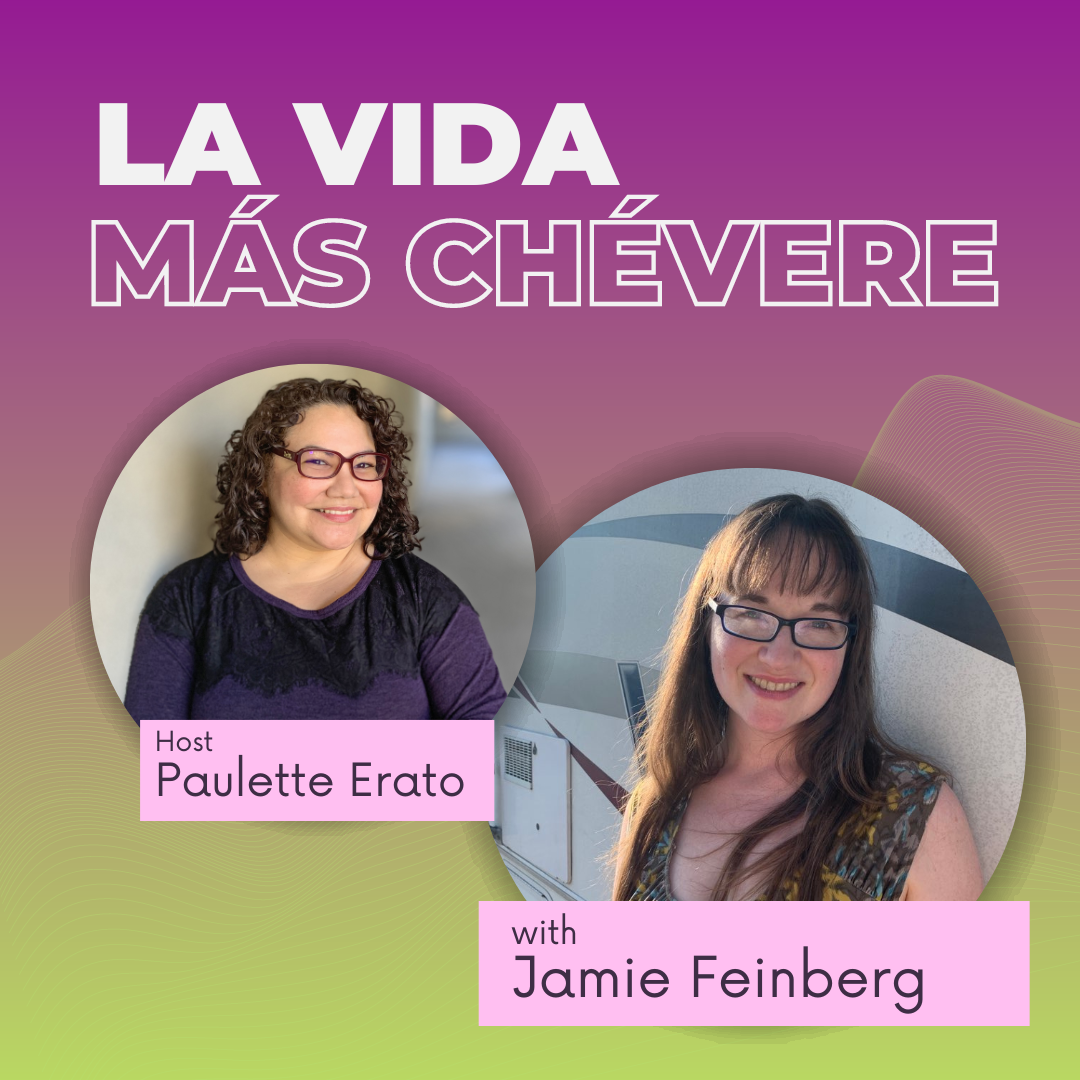
I recently was interviewed by the delightful Paulette Erato for her podcast and Youtube channel, LA VIDA MÁS CHÉVERE. We talk all about my own wedding and the ways I held my boundaries to create the wedding I wanted, without the drama I wanted to avoid. Give it a watch or a listen (it’s only 16 minutes, so it’s pretty quick) and let me know what you think!

Want some support in navigating boundaries in your own life? Let’s hop on a call. I’d love to help you get some clarity and create a road map for how to move forward through the challenges (and joys) in your own life, whether you’re planning a wedding, navigating a transition, getting into the dating world, or building a business.

Listen

Watch

Childfree Weddings: Boundaries Without Drama?!

Book your clarity call

Help! How Do I Make Friends Who Don’t Have Kids? 

As a childfree woman, and as a person who has moved several times in addition to my five years of full-time travel in an RV, I’ve often been faced with the task of making new friends. Experience has shown me that as awesome as my friends with children are, especially at certain periods in life, parents don’t have as much free time to hang out with me as I’d like – especially if I want some social time without kids. So read on for my top tips, gleaned from my experience establishing myself in new communities over the years. 

Before I begin, let me make a few things clear: 

One – I love children. I have zero issues with the fact that children exist. (I know that may sound snide, but it’s me being honest and forthright.) I also enjoy spending time with them, as long as a) it doesn’t involve holding or caring for babies, and b) they respect my boundaries, as well as c) they are not mine, and they go home with their families after spending time with me. 

Two – I love parents! And there are tons of awesome coaches in the world who write their content for parents. So I’m not going to cater my content to them, but I would encourage you to seek them out if you haven’t found them yet. 

Three – This article is tailored at childfree humans, but it is entirely possible that even if you aren’t childfree, you enjoy making new friends outside of the context of parenting, or you’re of an age where children have grown and moved away. Feel free to read on, keeping the intended audience in mind of course (and keeping any comments mindful of that fact too). 

So, with all those caveats out of the way, here are my top tips for making childfree friends!

  1. Go Where The Children Aren’t

Just as I’d send new parents to the playground or the library to connect with other families, your best bet when you’re on the hunt for new childfree friends is to gravitate towards places without children. So join a book club, or head to your local bar for trivia. Take a dance class or attend one of those painting classes where you’re encouraged to drink wine. Audition for a play (one with only adults!) or join your local softball or roller derby team. Learn to crochet or sign up for a DnD group (again, one with only adults!). Take a class at your local community college.

If you’re sober, meet people that way. If you love to sing, hit up the karaoke bar. Will there be plenty of people at these events who have children? That’s likely. But you’ll be on the right track by making connections with people who are socializing WITHOUT KIDS. (That means they’re able to prioritize themselves, and they’re choosing to do it at places you enjoy too!) You may find an awesome new parent friend who you hit it off with. Or you can tell them about yourself and that you’re looking to meet friends, and they may introduce you to their single friend or favorite DINK (double income, no kids) couple. 

The key? Attend with an open mind, and keep trying new things. 

  1. Share Vulnerably (But Judiciously) Wherever Possible

The way to make deep and meaningful connections with people is to share vulnerably. And yes, that means you need to be willing to share first! A small percentage of people in the world are happy to share their deepest feelings with strangers, without an invitation. But most of us wait to be asked or wait until the other person shares FIRST. 

So go into each day with curiosity, and bring a few questions in your pocket if you need ideas. 

What’s your favorite trip you’ve ever taken? 

Did you have a special person in your life who made a difference in who you are? 

If you had to eat the same food for the rest of your life, what would it be? 

Okay, so maybe that last question isn’t super deep. But each relationship needs to start somewhere. You want to ask one question and wait for a response. Truly listen and respond to what you hear. It may lead you to ask a different question you wouldn’t have thought of. And if they’re reluctant to share, that’s okay – you go first! And then ask them what their answer is. 

You’ll tend to have the most success when you do more listening than talking, but do share enough to show them it’s a safe space to share too. 

  1. Met A Potential Friend? Speak Up!

I’ve had several times in my life when I had an amazing conversation with someone. Only later, when I was reliving it in my mind or relaying the exchange to someone else, did I realize I should have asked them to meet up for coffee sometime or ask to connect on social media or something. 

So it’s now my habit to be ready to connect at any time. I have business cards on me, and I reach out to fun people I interact with on social media. I’ll tell them I’m always looking to meet new friends and I’d love to have a drink sometime and learn more about them. 

Seize the day, friends! Don’t miss out on connecting with your new best friend after the most hilarious bathroom conversation ever!

  1. Get Outside Your Comfort Zone To Increase Your Odds

See what it feels like to add a new activity to your schedule each week. Too busy or introverted for that? Make it bi-weekly or every month. 

Do a quick audit of your schedule currently and how it aligns with your priorities and your energy. (This is one of my favorite things to do with my clients!) Go through the different areas of your life and consider how much time and energy they’re currently taking up and how happy you are in that area. 

If you value great conversation and don’t have any close friends right now, set aside some time each week to move you toward that goal. While you do sometimes have to do a bit of the chit-chat thing when you don’t know someone well, these tips are a great way of getting to the good stuff and knowing whether someone is worth the effort. 

And remember, you don’t have to do this forever. Just until you’ve got a comfortable number of new friends. 

  1. Not Everyone Needs To Be Your Everything Best Friend

Perhaps you once had a best friend, but you had a falling out. Or maybe you’ve never had a best friend, and you’ve always wanted one. 

Be careful to remember that there is a place for a variety of friends in the world. If we try to slot someone into the “best friend” category and all they’re ready for is to be the “drinks after work and catch some live music” friend, we could send them running for the hills. 

Some of your friends may include: 

  • Hobby friends (they love seeing you at drag night/crochet/softball/theater/book club, but they don’t seek out or maintain a relationship elsewhere)
  • Neighbors (greet each other with pleasantries, maybe even invite you to a BBQ sometime?)
  • Work friends
  • Spiritual friends (connected from church or synagogue or mosque or your local Pagan meetup or what-have-you)
  • Parent friends (folks you love to hang out with, but that you know won’t always be available for a drink or meetup as their kids come first) 
  • Childfree friends (though some childfree folks are caregivers, many enjoy a true freedom with their schedule that can be really helpful for meeting up…and we childfree folks have a lot in common!)
  • Family friends (your family or the people who you think of as family)
  • Friends who you attend events with (key tip – don’t rule out folks in different age brackets! For instance, for me, I set my own schedule and I love to have daytime friends – sometimes retired folks have more flexibility than folks my own age)
  • Friends who will help you in a pinch
  • Your ride-or-die, do anything for you, friends

In an ideal world, you want friends in lots of categories, and some of the friends in the top categories may and can move into the lower, more connected categories. It’s normal for people to start out closer to acquaintances. Don’t be upset if most people don’t want to immediately be your best friend. 

On the other hand, I have several delightful friends who skipped several categories nearly immediately. (I have a hunch that being neurodivergent/highly sensitive/empathetic can play a role in this tendency.) So be open to that too, but make sure to avoid smothering them with your expectations. (And that’s where boundaries come in, friends!)  

If your “childfree” friend turns into your “parent” friend at some point, that’s okay too! We all go through phases in life, and we can love and value what was even if it changes. And if you struggle to maintain even a modified friendship with your friend, take heart knowing that a) you’re not alone and b) as they figure out the whole parenting thing, they may have more free time to spend with you again. Try to offer empathy and compassion to them (in addition to offering yourself self-compassion as you mourn what was). 

  1. Online Friends Are JUST As Valuable As In-Person Friends

When I moved to New Hampshire after some time away in college and working in professional musical theater, I didn’t have any friends at all and had to start from the ground up. I staged a musical revue to meet my friends, and yes, it worked! 

But as much as I loved my friends, I found that a) none of the lovely people I met that way turned into my best friend and b) most of those friendships struggled when I moved away. 

When I began getting serious about my own personal development, I sought accountability, training, and coaching online, and as a result, I met dozens of people who I had a LOT in common with around the world. 

As I traveled in my RV, I had the unique privilege of meeting many of my friends in person, and that was even more wonderful! These are people who my husband and I have a lot in common with. Even as our life situations have changed, I’ve maintained these relationships, as well as many valuable friendships with people back in NH or from my college or high school days, online. 

Especially if you’re in a small town or otherwise aren’t finding “your people” where you are, please know that your people ARE out there. You can dive into your personality studying mental fitness training or the Enneagram, or you can join some Facebook groups for like-minded people and be open to making friends there. And don’t be afraid to make the “first move” and ask for a virtual coffee chat.

P.S. I’d love to hear your top takeaway on this topic! Did I miss something? Let me know! And please share it so the childfree people in your life and those seeking friends will know that it can get better.

waiting for your chance?

Good news if you enjoy a bargain. I decided to offer a few sales. If you’ve been on the fence about working with me or my previous offers weren’t in the budget or quite the right fit, please check out these. (All info in the images is also duplicated below.)

I’d love to support you, and if this resonates with you, sharing helps me to connect with other people who are ready to take their next step. You can reach me at rossandjamieadventure @ gmail.com.

Spring Sale! (expire after the equinox on Monday, 3/20/2023):

One-Off Coaching/Consulting Power Session: Know where you’re headed and want some coaching or consulting on your particular question or situation? This is made for YOU.

Includes pre-session worksheet, 75 minute session, follow-up summary w/ road map and suggestions for next step

Ex. What are the next best steps for me to take in my business? Can you help me to create a schedule that’s more aligned with my values? How can I set some boundaries so that people stop expecting me to do everything? Which of these awesome hobbies/side projects should I pursue as a business?

Regular price $179, sale price $70 (more than 60% off!)

Buy Two Months of Coaching, Get One Month Free: For new 1:1 clients, purchase two months of coaching and/or mental fitness training and receive your third month of coaching free! (I am actually not allowed to promote this discounted price publicly, so message me for a free coaching session and I’ll share all the details with you!) Prefer a group session? Reach out to me for additional savings opportunities.

Free Session & Save: New clients who book their free session with me receive a credit of $200 that can be used toward any regularly priced coaching package before the end of June, 2023.

Enneagram-Curious: Considering working with a practitioner 1:1 to discover your number and learn more about who you are and why you do what you do? Know your number, but want some support figuring out what you can actually DO with that information? I’m offering an introductory price on this new offer of only $50 for an hour of Enneagram training, or only $150 for 4 sessions.

Coaching-Curious Sampler: Intrigued by mental fitness training, coaching, consulting, and the Enneagram? Not sure where to start? This sampler includes four sessions with me where you’ll be introduced to each of these modalities and explore the roles they might play in your personal development. If you’re ready for support in creating a life you love (or in embracing the one you have) but feel some blocks and are craving clarity, this sampler is designed for you. Introductory price: $250

Sometimes, All It Takes is a Nightstand

I was half asleep on Monday, January 24th when I reached over to grab my eye mask and realized it was soaking wet in my hands. All of a sudden, my brain went to work. It computed that, in fact, the whole nightstand was wet.

(The portable humidifier had been on it. In that moment, I realized that the humidifier had leaked water everywhere, soaking everything from tissues to eye masks in its path.)

I had a brief thought about beginning to clean it up, which I knew would wake me up completely and make it hard for me to get a good night’s sleep. But then, instead, I called out to Ross, calmly and with complete control.

“Hi Ross! Do you have the spoons to come help me with something?”

Previous to my Enneagram and mental fitness work, I would have asked that question as if it was an absolute emergency. In fact, it wouldn’t have been a question at all. “Ross, come here!” I would have yelled across the apartment. “There’s a mess, and I need help!” Cue flashbacks to”‘the time I knocked an entire bowl of Chex Mix on the floor” and “the time I realized my cat had fleas”, among other memorable moments.

But this time, I recognized that it wasn’t actually an emergency. This situation was relatively stable. There was no need to introduce more stress and drama into the equation.

Ross came in, cracking some cute joke or comment about spoons. I calmly explained to him what had happened, in a very matter-of-fact way. Instead of asking him to completely handle it, I asked him if he’d go get a garbage can. Then, in my half sleepy state, I took him through solving the situation, one step at a time. I did used my handy problem-solving skills, which I excel at, apparently even when half-awake, so that I could avoid Ross feeling overwhelmed, as I know he would have navigating it solo. (You can learn a lot after 13 years of dating or marriage!) I never got out of bed this entire time. I heard myself saying things like, “Can you please go hang this somewhere?” or “Can you please go get a towel?”.

I trusted him to take care of it. I let go of the need for it to be done a certain way. And somehow, when it was done, I just went to sleep. (Yes, I went to sleep! No panic, no racing thoughts, no getting out of bed to see where he hung things…I just went to sleep.)

A good friend and member of one of my Enneagram groups asked me what was different about this time, and I shared that it was a few things.

The main difference is that there was a space before doing. Old me would have IMMEDIATELY started handling the clean up, before I even stopped to think about how I wanted it done, or what should be done, or if it was mine to do or I could ask for help or if I should wait or gather some things first. As I did the cleanup, I would have felt feelings of frustration and anger, and I would have resented doing it solo…and by the time I would have asked Ross to help me, I would have been resentful that I had to ask or that he hadn’t helped me yet.

Ross would have come into the room with his guard up, and his stressful vibes would have fed on mine and caused a “saboteur contagion”, as we call it, with him struggling so much with my energy that he a) probably wouldn’t have finished helping me before giving up and leaving the room, upset and b) whether he finished it or not, he’d have ended up a complete wreck by the end, and then I’d be upset he was upset and I’d be unable to let it go (or sleep).

Instead, there was a space. A breath. A pause as I processed what happened and held off acting for a second. Instead of acting on autopilot, going to darker and depressing parts of my mind, I had the space to breathe and ask for help, calmly and without needing things to be done a particular way. It just became an “any old situation”, not an emergency. Even when I woke the next day, I didn’t get dazed when I walked into the bathroom with stuff hanging everywhere. Again, I just let it go.

My mental muscles are now so strong that I didn’t get triggered and have saboteurs react. There was a pause and then a move into my sage/wise mind/calmer self. And I stayed there the entire time.

Another friend shared with me that she was truly impressed because with all the work she has done on herself, she knows she still would have had to have control of that whole process. She couldn’t have stayed in bed to manage and would have had ways it had to be done. My first friend suggested the two of them should join my mental fitness program. My third friend has already, so I told the other two, join the club!

If you’d like to learn the science and get the practical tools to finally, once and for all, be able to be less reactive, more happy, less stressed or fearful, more efficient and effective, let’s connect. Mental fitness has been an absolute game-changer for me, and I want you to experience it too. Book a time here for an intro, with no obligation. You deserve to be happy. We all do.

P.S. If you’ve been doing your own work and already have rock-solid mental health practices, go you! Please consider sharing this with a friend or family member (or many) if it resonates with you and you want to share the benefits of a life you love and daily practices that support you.

Time for Reflection

This is the time of year when I take time to reflect.

Where was I at this time last year, and how much progress did I make?

What moved the needle for me?

Am I satisfied with my progress?

Am I proud of what I did, in spite of all of the challenges and pressures?

Ultimately, this reflection needs to be in balance. Shaming ourselves for what we didn’t accomplish or beating ourselves up isn’t the answer.

Likewise, brushing past our shortcomings and forgetting the ways we let ourselves down entirely risks us repeating mistakes again.

There is a gift in everything that happens to us, if we choose to see it. There is a gift in every choice we made, whatever the outcome, if we are lucky enough to make it through.

The key, though, is deciding there’s a gift, and then finding what it is.

And showing ourselves, and those around us, empathy is an essential part of the process.

I do this reflection work in several ways; on my own, in my mastermind, with close friends, and sometimes with a coach, like I did yesterday.

I will do similar work as I set goals and plan how I will hold myself accountable and set up great habits in 2023.

Today I celebrate me:

  • I am a childfree coach supporting women and all who are ready to create a life they love
  • I have made incredible strides in my mental fitness
  • I have made professional gains in the arts and in my writing (and a bit in my speaking career too)
  • I have gained a lot of clarity in my business
  • I have shown love, and compassion, and supported many dozens of people this year, not least of all my family
  • I’ve helped my clients improve their lives and find more joy and success
  • I’ve started three new group programs
  • I have had so much fun
  • I have made new friends, strengthened existing friendships, and further contributed to and built community around me

I wish you joy and peace in this holiday season, whatever you celebrate (or don’t).

P.S. I do have at least one more spot in my mental fitness program for January. If you’d like an affordable route to accountability, peace, success, and even community, you can grab a spot on my calendar to learn more. Please book ASAP as I am taking some time off for the holidays and the group program starts the second week of January. Feel free to email rossandjamieadventure @ gmail.com if you don’t see a time that works for you.

P.P.S. What is the one thing you are celebrating yourself for as we close out 2022?

Anxiety: a path forward

Woman in shades of pink walks forward into a canopy of trees

I keep changing and changing and changing this title, but in truth, I know exactly what I’m going to say. The conundrum, of course, is that while I have learned that anxiety, even lifelong, chronic anxiety struggles, can get better, I also don’t want to be one of those people promising you snake oil or making you feel invisible if your anxiety proves to be way more stubborn than my own challenges have been.

So, with that caveat, here’s an update on where I’m at, how I did it, and what I can suggest for other people who are struggling too.

The Recap

Last October, I started having panic attacks. Debilitating ones, that were really getting in the way of my work and my life. While I had experienced perhaps a half dozen panic attacks while living in an RV and traveling the US, I was otherwise completely new to them. And when I’d had them, they hadn’t gotten in the way of my work or my life – I knew what triggered them, and within a few hours, I’d been able to move on from them.

But last fall was different. My husband was really worried. I was really worried too; as the current primary breadwinner in our relationship, and with a husband who was a full-time student, what if I couldn’t pay our bills? So I was having panic attacks and I was spiraling further, getting anxious about having anxiety, which I’ve since read is a sign of an anxiety disorder rather than simply anxiety (which everyone has on some level, and which is 100% normal, to my totally not clinical but still very educated on anxiety understanding).

On one particularly bad day, after a series of particularly bad days, I wanted to go to the mental health clinic. But, of course, I was anxious to go. I didn’t know what to expect. I didn’t quite believe they’d let me in, especially because I hadn’t received my health card yet (which is your ticket to free health care as a Canadian resident).

My loving husband took me. He sat with me patiently in the car, and he came inside with me too. And the therapist I saw was so affirming, so understanding, and so encouraging as she got me on the list for free province-provided therapy. She even believed me and took notes when I told her I’d recently realized the ample supplies of nightshade vegetables I’d been filling my diet with were apparently a huge anxiety trigger (tomatoes, peppers, potatoes, and eggplant were filling my diet during this harvest season), based on my own Googled research.

This began more than six months of challenges as I waited, and waited, and waited to get that free therapy. Backing off the nightshade vegetables helped make the panic attacks less frequent (think 1-2 per week rather than daily), and I finally signed up online with my first therapist since college. She went from being okay for a few months, helping me to treat the anxiety, to being completely awful, around the same time I was seeing a very mediocre (at least for me) free therapist (finally) provided by the province.

Things Began Shifting

By the spring, a few things began shifting in my life:

  • I wrapped a contract with a client that had been having a negative effect on my mental health for a very long time, giving me space to begin healing from what I later realized was pretty intense burnout
  • The work I’d been doing on myself using the Enneagram was paying off, and I was seeing the benefits in my relationship with Ross, with my family and friends, and most importantly in my relationship with myself too
  • I found a new therapist who was NIGHT AND DAY from my previous experiences; she’s still supporting me, and I am grateful every day that I didn’t give up on finding the right person for me
  • The time I’d invested in finding community on PEI was bearing fruit; I had local friends and was doing meaningful work, collaborating in multiple music ensembles and enjoying the opportunity to lead one of them
  • I created an Enneagram group and had a really successful pilot program (my first group coaching program over several months)
  • I discovered the Positive Intelligence framework and became a major advocate for the benefits of mental fitness (and subsequently, I became a mental fitness trainer and incorporated the work into my coaching business)
  • I finally stepped outside of my comfort zone into an Anti-Anxiety program offered free to Islanders (called I CAN) and completed it successfully

According to my anxiety coach, my last panic attack was in late August. I know it was a combination of the techniques I had internalized by this point (learned in both I CAN and in my mental fitness studies) as well as some of the deeper personal development I had done. Having my therapist to cheer me on was especially helpful on the days I needed someone to vent to – whether you work with a therapist as well (always ideal) or just find a friend or hire a coach or accountability partner, that safe space was key.

I’ve now realized that I’ve been battling anxiety my entire life, or at least as far back as middle school. I also realize that if I had known then what I know now about mental fitness, I wouldn’t have needed to have the stress and overwhelm in my life. And I would have made healthier choices from a sage place rather than acting out of fear or to numb or distract myself.

What I Recommend

My own personal journey to get control of my anxiety was more long-winded than it needed to be, but there were also a lot of factors at stake. If I hadn’t been overwhelmed in my work, things might have played out differently, perhaps on a faster timetable. If I wasn’t so sensitive to nightshades, the panic attacks may have been less debilitating. But what I now realize is that the gift of my panic and anxiety struggles over the past year or more is that I now have direct experience I can use when coaching my clients. I can relate to them in ways I never could have five years back. What a gift!

Also, for those of you with access to some kind of free anxiety program, or one that’s very affordable for you, do consider it, if you’ve got the bandwidth for it. While I wasn’t learning many new things in mine, the daily practice and accountability (just like I use with my clients) helped me to finally finish integrating all the things people had taught me over the years. I CAN is a great option for Islanders. Find out what, if anything, is available for you.

If you want to sleep well at night, if you want a life with less stress and overwhelm, if you want the tools to find joy and peace and curiosity again, I’d love to introduce you to the mental fitness training we can do together. I have a few spots open in a small group program that will be starting up this January. I’m also developing a new program specifically with musicians in mind, and I’m planning future groups for a) for childfree people b) for men and c) for retirees.

If you’re intrigued, the easiest way for me to tell you more is for us to hop on a call so I can give you a tour of the program and a bit of coaching and some training to incorporate when you’re feeling anxious or fearful or angry or judgmental. I include a few of my favorite mindfulness techniques that you can actually use anywhere, at any time. It’s a free call, and if it intrigues you, I’m offering my programs on a sliding scale to make them as accessible as possible as we begin 2023.

I have such gratitude to be a coach and to be doing this life-changing work. Please reach out to learn more, and if you think this might resonate with a friend or a family member, please encourage them to do the same.

Take care, and be well.

Three Steps for Times of Stress

In the past month, I’ve launched my first two mental fitness groups (using the researched-based, acclaimed Positive Intelligence program and app that I’ve been studying for more than six months), conducted a performance of “O Canada” for a Canadian citizenship ceremony, completed an anti-anxiety program, completed a three month Enneagram group, been interviewed on a podcast, performed professionally as a member of Luminos Ensemble, written most of a book, coached childfree women (and people who aren’t raising children) on ways to create a life they love, and done writing and editing for clients. I’ve also dealt with the Hurricane Fiona aftermath, attended to a variety of personal and professional tasks, and made some time for fun fall activities, including getting together with friends.

One of the brilliant things about my work in the mental fitness realm has been realizing that I turn less and less things into stress in my life now. I’ve realized that rather than let all of the things in my busy life feel like things I “must” do, AKA things that cause me stress and need to be dealt with, I can instead focus on curiosity, on navigating my to-dos with joy or at least without the extra emotional weight I had a tendency to add to them. 

My mantra, which I developed in my first Enneagram group and continue to find exceptionally helpful, is this: “Breathe. Prioritize. Do what’s mine to do.” 

This mantra won’t work for everyone. You may in fact be one of those people who don’t take on other people’s tasks. Or you may need a mantra that’s more about doing and less about stopping and prioritizing for you personally to find balance in your life. But if my mantra strikes a chord, read on.

If you’re feeling stressed, unsure how to juggle all the responsibilities, both spoken and unspoken, in your life, try my three steps on for size. 

  1. Breathe: Realizing your breathing is getting more shallow? Starting to feel overwhelmed or anxious? As soon as you recognize it, stop that thought train. Focus on your breath. In, and out. Again. Stop the “what-if” and the “must-do” and tune into your breathing. 
  2. Prioritize: Once you’re feeling a bit calmer, whether from breathing or doing other mindfulness exercises, NOW you’re in a healthy space. You’re now using the part of your brain that’s capable of navigating challenges and getting curious about what’s possible. So it’s time to prioritize. What’s the one thing that you could get done today that would make your week, or even your year? What are the deadlines that will really screw you up if you miss them? Who is more important, and what are they expecting of you? Prioritize. 
  3. Do what’s mine to do: Now, and only now, it’s time to return to doing. Since you’ve stopped the auto-pilot and tuned into what matters, you can now do what’s truly yours to do. Most things I think are mine to do are, it turns out, actually not. I make a whole lot of responsibilities up. Sometimes I think I need to do work for other people. So don’t blindly do: make sure you do what’s YOURS to do today. And always, or at least whenever you can remember to stop, consider what matters, and then move forward. 

Keep swimming, my friends. You are wonderful just as you are, truly, right now. And I believe in you.

P.S. If you want support in how to follow these steps, that’s what I’m here for. Let’s hop on a free call where you can learn more about mental fitness and how to handle life’s challenges with more efficiency and joy.